
2023 Residential Clean Energy Credit

The Inflation Reduction Act of 2022 extended and increased the Residential Energy Credit and renamed it the Residential Clean Energy Credit.
2023 IRS Security Summit

This year’s Security Summit tax professional summer campaign is emphasizing the following series of simple actions that they can take to better protect their clients and themselves from sensitive data theft.
34 Latest States with a Pass-Through Entity Tax

Pass-Through Entity Tax A total of 34 states have enacted legislation that creates a pass-through entity tax as a workaround to the $10,000 cap on the state and local taxes (SALT) itemized deduction. What is Pass-Through Entity Tax? The pass-through entity tax (PTE) allows partnerships and S Corporations to elect to be taxed at the entity level for state income tax purposes. If the entity makes this election the partner or shareholder is usually allowed to: (1) Claim a credit on their state individual income tax return for the amount of their distributive share of the pass-through entity tax paid by the partnership or S Corporation, and (2) Allows the partner or shareholder to not have to report their distributive share of income on their personal state income tax return. States with a Pass-Through Entity Tax A pass-through entity tax went into effect in the following states before 2022: States with Pass-Through Entity Tax Starting in 2022 A pass-through entity tax went into effect in 2022 in the following states: States with a Pass-Through Entity Tax that is Retroactive to 2022 A pass-through entity tax was signed into law in 2023 and is retroactive to 2022 for the following states: States with Pass-Through Entity Tax Starting in 2023 A pass-through entity tax goes into effect beginning in 2023 in the following states: Pass Through Entity Tax Rules by State Here are brief details as well as where to learn more about the pass-through entity tax rules for the following States that have enacted a pass-through entity tax: Alabama See the Alabama Electing Pass-Through Entity Tax Guidance page on the Alabama Department of Revenue website for more information. Arkansas For more information, see the Pass-Through Entity Tax: FAQs on the Arkansas Department of Finance and Administration’s website. Arizona For more information, see the Senate Fact Sheet for HB 2838 on the Arizona website. California For more information, see the Pass-through entity (PTE) elective tax page on the California Franchise Tax Board’s website. Colorado For more information, see Colorado House Bill 21-1327 on the Colorado website. Connecticut For more information, see the following on the Connecticut Department of Revenue Services website: Georgia For more information, see Rule 560-7-3-.03 Election to Pay Tax at the Pass-Through Entity Level on the Georgia Department of Revenue’s website. Idaho For more information, see the Pass-Through Entities page on the Idaho State Tax Commission’s website. Hawaii For more information, see Hawaii Tax Information Release No. 2023-01. Illinois For more information, see the following on the Illinois Department of Revenue’s website: Indiana For more information, see Pass Through Entity Tax page on the Indiana Department of Revenue’s website. Iowa For more details on how to make the election and other information see the Pass-Through Entity Tax (PTET) page on the Iowa Department of Revenue’s website. Kansas Kentucky For more information see Kentucky HB 360, Section 16 on the Kentucky Legislature website. Louisiana For more information, see Revenue Information Bulletin No. 19-019 – Guidance on Pass-Through Entity Election on the Louisiana Department of Revenue website. Maryland For more information, see the following on the Comptroller of Maryland’s website: Massachusetts For more information, see the Elective pass-through entity excise page on the Massachusetts Department of Revenue website. Michigan For more information, see the Flow-Through Entity Tax page on the Michigan Department of Revenue website. Minnesota For more information see the Pass-Through Entity (PTE) Tax page on the Minnesota Department of Revenue website. Mississippi For more information, see the Mississippi Department of Revenue Notice 80-22-001. Missouri For more information, see the Pass-Through Entity Tax FAQs on the Missouri Department of Revenue website. New Mexico For more information see the Pass-Through Entity page, in the Frequently Asked Questions About Direct Taxation of Pass-Through Entities section, on the New Mexico Taxation and Revenue Department’s website. New Jersey See the Pass Through Business Alternative Income Tax Act page on the New Jersey Division of Taxation website. New York For more information, see the following on the New York State Department Taxation and Finance’s website: North Carolina For more information see North Carolina S.B. 105 pages 594 – 599. Ohio See the Ohio’s PTE SALT Cap Workaround for “Electing Pass-Through Entities” beginning in Tax Year 2022 Tax Alert on the Ohio’s Department of Taxation website for more information. Oklahoma For more information, see page 7 of the 2021 Oklahoma Small Business Corporation Income and Franchise Tax Forms and Instructions (Form 512-S) on the Oklahoma Tax Commissions website. Oregon For more information, see the Pass-Through Entity – Elective Tax FAQs on the Oregon Department of Revenue’s website. Rhode Island For more information, see the following on the Rhode Island Division of Taxation’s website: South Carolina For more information, see SC Revenue Ruling #21-15 on the South Carolina Department of Revenue’s website. Utah For more information see the SALT Report & Tax Facts on the Utah State Tax Commission’s website. Virginia See the Pass-Thru Entities page and Virginia Tax Bulletin 22-6 on the Virginia Department of Taxation’s website for more information. West Virginia For more information see West Virginia Senate Bill 151. Wisconsin For more information, see the following on the Wisconsin Department of Revenue’s website: CrossLink Professional Tax Software CrossLink is the industry’s best professional tax software solution for high-volume tax businesses. Built based on the needs of busy tax offices that specialize in providing their taxpayer clients with fast and accurate tax returns, CrossLink has been a trusted software solution since 1989. CrossLink’s in-depth tax calculations, advanced technological features, and paperless solutions allow you to prepare the most complicated tax returns with confidence and ease while providing your customers an unparalleled experience.
Clean Vehicle Tax Credit: Qualifications and Rules for Electric Vehicle Purchases

Clean Vehicle Tax Credits for 2023 and Beyond This article provides details on the three credits for electric vehicles and fuel cell vehicles that are included in the Inflation Reduction Act that became law in August of 2022 and go into effect in 2023. New Clean Vehicle Tax Credit Tax Credit for Used Clean Vehicles Commercial Clean Vehicle Tax Credit New Clean Vehicle Tax Credit A taxpayer that purchases a new electric fuel cell vehicle in tax years 2023 – 2032 may be eligible for up to a $7,500 nonrefundable credit for New Clean Vehicles. Taxpayers may claim this credit by completing Form 8936 and Form 8936, Schedule A and including it with their federal income tax return. To see what these two forms look like see the following on the IRS website: New Clean Vehicle Tax Credit Requirements The full $7,500 credit is available for fuel cell vehicles that meet the requirements under IRC 30B(b)(3). The basic requirement is that the vehicle must be propelled by power derived from 1 or more cells which convert chemical energy directly into electricity by combining oxygen with hydrogen fuel which is stored on board the vehicle in any form. What are the Critical Minerals Requirements for EVs? Vehicle’s battery must contain a threshold percentage of critical minerals that were extracted or processed in a country with which the US has a free trade agreement or recycled in North America as follows: What are the Battery Components Requirements for EVs? To meet this requirement the vehicle’s battery components must meet a percentage threshold for manufacturing or assembly in North America as follows: For more details see the following on the IRS website: Tax Credit for Used Clean Vehicles A taxpayer who purchases an eligible used clean vehicle in tax years 2023 – 2032 may be eligible for the new nonrefundable Credit for Previously Owned Clean Vehicles. The credit is 30% of the vehicle’s purchase price or $4,000 whichever is less. Taxpayers may claim this credit by completing Form 8936 and Form 8936, Schedule A and including it with their federal income tax return. To see what these two forms look like see the following on the IRS website: Used EV Tax Credit Requirements For more details see the following pages on the IRS website: Commercial Clean Vehicle Tax Credit A taxpayer who purchases a qualified commercial clean vehicle on tax years 2023 – 2032 may be able to claim the new nonrefundable Commercial Clean Vehicle Credit. Taxpayers may claim this credit by completing Form 8936 and Form 8936, Schedule A and including it with their federal income tax return. To see what these two forms look like see the following on the IRS website: What is the Commercial Clean Vehicle Tax Credit? Businesses and tax-exempt organizations qualify for the commercial clean vehicle tax credit, also known as the commercial electric vehicle tax credit. This credit is calculated as the lesser of: The maximum credit that may be taken on a qualifying vehicle is: Or Commercial Electric Vehicle Tax Credit Requirements For more details see the following pages on the IRS website: CrossLink Professional Tax Software CrossLink is the industry’s best professional tax software solution for high-volume tax businesses. Built based on the needs of busy tax offices and mobile tax preparers that specialize in providing their taxpayer clients with fast and accurate tax returns, CrossLink has been a trusted software solution since 1989. CrossLink’s in-depth tax calculations, advanced technological features, and paperless solutions allow you to prepare the most complicated tax returns with confidence and ease while providing your customers an unparalleled experience.
Understanding Form 1099-K
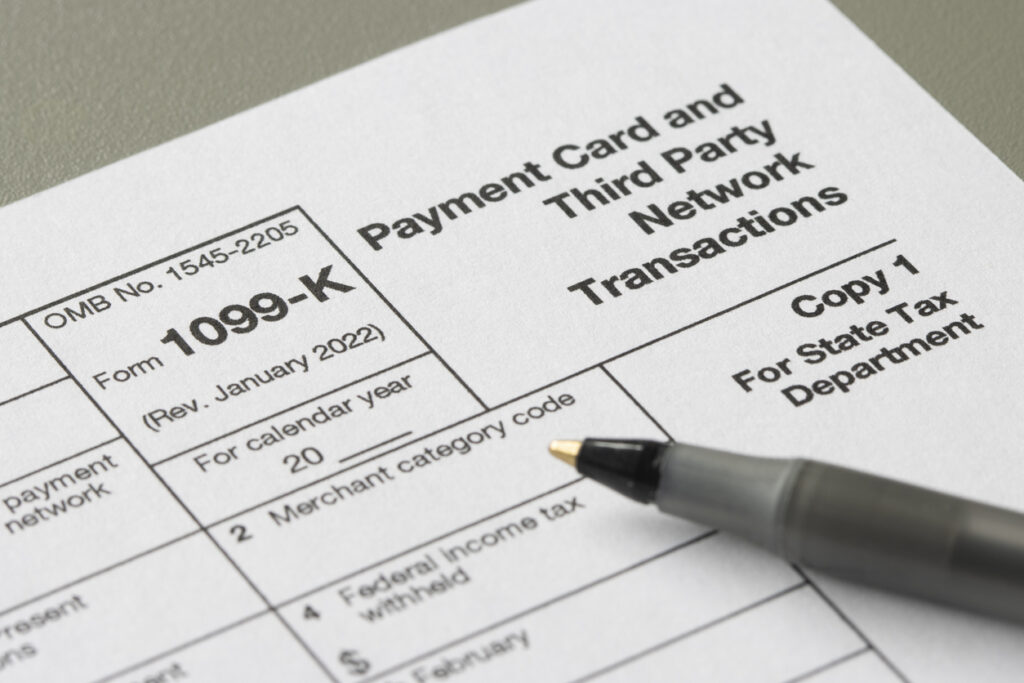
Form 1099-K is an IRS information return used to report payment card and third-party network transactions on a federal tax return for businesses, sole proprietors, individuals, and gig economy workers.
2023 Tax Filing Deadline

The federal 2023 tax filing deadline for Tax Year 2022 individual tax returns, also known as Tax Day, is Tuesday, April 18, 2023. This day is also the filing deadline for calendar year C Corporations (1120) and Estate/Trust (1041) returns.
When to Apply for a New EFIN
Effective in Tax Year 2011, federal legislation mandates that anyone filing more than 10 tax returns must file electronically. Before you can electronically file tax returns, you must apply to become an Authorized e-File Provider (“Provider”) with the IRS.
States With Special Laws Regarding Bank Products Fees

States With Special Laws Regarding Bank Products Fees Background: Arkansas (AR), Connecticut (CT), Illinois (IL), Maine (ME), Maryland (MD), and New York (NY) require tax preparers to charge the same fees to all clients irrespective of whether or not a client uses a bank product to facilitate payment of their refund. More details on the regulations are provided below. Legislation in each of these states also imposes other obligations on tax preparers, including the requirement to provide specific disclosures and notices to taxpayer clients. Tax preparers doing business in one or more of these states should familiarize themselves with the requirements of the law of those states. For more information on these requirements, see the State Requirements for Preparers which offer Tax Refund Products on the Tax Resource Center. Click on the state to view the specific legislation. Arkansas (A.C.A. § 4-116-107) Connecticut (CT Special Notice 2017(8)) Illinois (815 ILCS 177/25(a)) Maine (Me. Rev. Stat. Ann. tit. 9-A, § 10-310(2)(A)) Maryland (MD Code, Commercial Law, § 14-3806) New York (N.Y. Tax Law § 32(b)(2)(f)(1)(C)) CrossLink Professional Tax Software CrossLink is the industry’s best professional tax software solution for retail tax businesses. Built based on the needs of busy tax offices and mobile tax preparers that specialize in providing their taxpayer clients with fast and accurate tax returns, CrossLink has been a trusted software solution since 1989. CrossLink’s in-depth tax calculations, advanced technological features, and paperless solutions allow you to prepare the most complicated tax returns with confidence and ease while providing your customers an unparalleled experience.
IRS Document Upload Tool Now Available for Certain Notices

The IRS announced on February 16, 2023 that they will now give taxpayers who receive certain notices requesting them to send documentation the option of uploading the documents via their secure IRS document upload tool instead of mailing them in.
Form 8962 Reminders for Tax Season 2023

Tax preparers must remember that if a taxpayer received an advance premium tax credit (subsidy) to help pay for their health insurance that they obtained through an Exchange, they must complete (including the reconciliation of the advance premium tax credit) and include the Form 8962 (Premium Tax Credit) with their federal return.