
IRS Document Upload Tool Now Available for Certain Notices

The IRS announced on February 16, 2023 that they will now give taxpayers who receive certain notices requesting them to send documentation the option of uploading the documents via their secure IRS document upload tool instead of mailing them in.
Head of Household
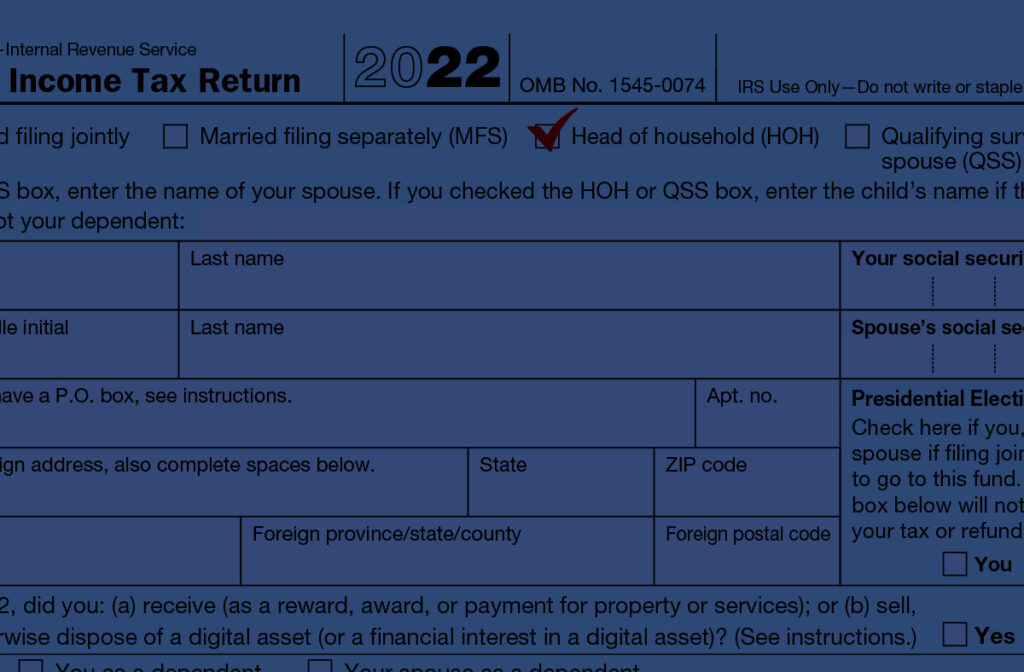
The Head of Household Filing Status is included as part of a tax preparer’s due diligence requirements.
9 States with No Income Tax for 2023

Income tax is a tax imposed by a government on income generated by individuals and businesses.
Form 8962 Reminders for Tax Season 2023

Tax preparers must remember that if a taxpayer received an advance premium tax credit (subsidy) to help pay for their health insurance that they obtained through an Exchange, they must complete (including the reconciliation of the advance premium tax credit) and include the Form 8962 (Premium Tax Credit) with their federal return.
Premium Tax Credit

What is the Premium Tax Credit? The Premium Tax Credit is a refundable tax credit for certain people who enroll, or whose family member enrolls, in a qualified health plan that they obtain through a health insurance Marketplace. This credit provides financial assistance to pay the premiums for a qualified plan by reducing the amount of tax the taxpayer owes. Most individuals who obtain their health insurance through a Marketplace will receive an advance of their premium tax credit. This advance (subsidy) goes directly to the insurance company and thus reduces the amount of premium they pay for their health insurance each month. The amount of the advance premium tax credit is based on income and family size from the taxpayer’s prior year income tax return. If the taxpayer received a subsidy (advance premium tax credit) the amount of subsidy they received needs to be reconciled with the premium tax credit calculated when they complete their federal tax return. The credit and the reconciliation calculation are done on Form 8962. For more information see the following on the IRS website: Premium Tax Credit Changes Under the American Rescue Plan For 2022 – 2025, taxpayers who purchased their health insurance through an Exchange (Marketplace) may see an increase in their premium tax credit. Under the American Rescue Plan Act, the amount that an individual must contribute towards paying for their health insurance based on the benchmark silver plan is reduced at every income level. This will result in an increase in the credit for most eligible individuals. The American Rescue Plan extended the credit to individuals with household income greater than 400% of the federal poverty level (FPL) by applying an applicable percentage of 8.5% of their annual household income that these individuals must contribute to their health insurance premiums for Tax Years 2021 and 2022. The Inflation Reduction Act extended these provisions for three additional years (2023 – 2025). The maximum contribution percentages by household income for the Premium Tax Credit for 2022 – 2025 are: Income as Percent of Federal Poverty Level Maximum Percent of Income 100% – 150% 0% 150% – 200% 0% – 2% 200% – 250% 2% – 4% 250% – 300% 4% – 6% 300% – 400% 6 % – 8.5% 400+% 8.5% For more details see the American Rescue Plan and Marketplace Fact Sheet on the Centers for Medicare and Medicaid Services website. ACA Marketplace Plan Under the Affordable Care Act Health Insurance Marketplaces were set up to help people find health coverage that fits their needs and budget. Every health plan in the Marketplace offers the same set of essential health benefits, including doctor visits, preventive care, hospitalizations, prescriptions and more. To be eligible to use the Health Insurance Marketplace the individual: No matter what state a taxpayer resides in they can use the Marketplace. Some states operate their own Marketplace. In other states, the Marketplace is run by the federal government. For more information see the Health Insurance Marketplace page on the IRS website. How Does PTC Work The calculation of the Premium Tax Credit is performed on the Form 8962. It is a three-step process: Form 8962 This is the form that is used to calculate the premium tax credit for taxpayers that obtained their health insurance through either the Federal or a State Marketplace and are eligible to claim the premium tax credit. In most cases, these taxpayers will have received an advance premium tax credit (subsidy) during the year that helped pay their monthly health insurance premiums. If they did receive a subsidy, then Form 8962 is also where the reconciliation of the advance premium tax credit and the calculated premium tax credit is done. Any taxpayer who received a subsidy must complete Form 8962 and reconcile the calculated premium tax credit (which is based on their actual yearly income and family size) with the total advance premium tax credit they received during the year. Also, any taxpayer who obtained their health insurance through a Marketplace will receive a Form 1095-A (Health Insurance Marketplace Statement) which they will need to complete the Form 8962. For more information, see the following on the IRS website: Excess Advance Payment of Premium Tax Credit If the result of the reconciliation of the amount of advance premium tax credit the taxpayer received during 2021 is greater than the calculated credit, the taxpayer will have to repay the excess as an additional tax on their 2021 federal tax return. If this occurs, it will be shown on the 2021 Form 8962 (Premium Tax Credit), Part III, line 29. In certain circumstances, the amount that must be repaid may be limited. In 2020, legislation was enacted that waived the requirement that taxpayers did not have to pay back any excess premium tax credit for Tax Year 2020 only. For more details on how an excess amount is calculated and when the amount may be limited, see the 2021 Form 8962 instructions beginning on page 15. Excess Premium Tax Credit Repayment If the taxpayer received an advance premium tax credit (subsidy) to help pay for their monthly health insurance premiums, a reconciliation of their total amount of advance premium tax credit with the calculated premium tax credit will be done on Form 8962. Since the amount of the advance premium tax credit is calculated based on income and family size from a prior year, the total advance received will probably not equal the calculated premium tax credit which is based on the income and family size reported on their federal tax return. If the amount of advance premium tax credit is greater than the calculated credit, then the taxpayer will have to pay back the difference. It is reported as an additional tax on Form 1040, Schedule 2 and is calculated on Form 8962, Part III. Premium Tax Credit Repayment Exceptions There is no exception to having to repay any excess premium tax credit that results from receiving more advance premium tax credit than the calculated credit Any excess premium tax credit
Why is My Tax Refund So Low

Many taxpayers may be surprised that the amount of their 2022 tax return is lower this filing season, leaving them to wonder, “Why is my tax refund so low?”
Written Information Security Plan

Federal law requires all tax preparers to create and implement a written information security plan.
Reminder: IRS Identity Protection PIN (IP PIN) is Available to All Taxpayers

As part of its wider effort to increase security, the IRS is reminding taxpayers that the IRS Identity Protection PIN (IP PIN) Opt-In Program is available to all taxpayers who can verify their identity.
Reporting Digital Assets on a Tax Return

The IRS has changed the virtual currency question of Form 1040 to now refer to digital assets.
Most Important Tax Changes for 2021

This page gives an overview of federal tax provisions that will go into effect in 2021 and items that are changing for calendar year 2021.