
IRS Tax Pro Account

The IRS introduced the Tax Pro Account in 2021 as an online tool for qualified tax professionals. Since its launch, the IRS has continued to expand its functionality, making it easier for tax professionals to assist clients with tax-related matters. The IRS Tax Pro Account was designed to help qualified tax professionals manage authorizations and access taxpayer information when issues arise with tax returns they prepared and signed. What Can Tax Professionals Do in a Tax Pro Account? Using an IRS Tax Pro Account, qualified tax professionals can: Multi-Practitioner Firms Multi-practitioner firms can link their firm’s CAF number to the firm’s Employer Identification Number (EIN). Firm administrators can then assign specific access levels and permissions for employees who need access to the firm’s Tax Pro Account. Who Can Use the IRS Tax Pro Account? The IRS Tax Pro Account is available to qualified tax professionals, including: To use the Tax Pro Account, a qualified tax professional must also have a valid Centralized Authorization File (CAF) number that is in good standing and assigned to them. Additional IRS Resources For more information about the IRS Tax Pro Account, see the following resources on the IRS website:
Complete List of 32 States with a Taxpayer Access Point or Online Account

The following States offer some version of a taxpayer online account.
Advantages of Creating an IRS Online Account

Creating an IRS Online Account For your average taxpayer, filing their yearly tax return can be confusing and frustrating. There are many tools and resources out there that can help the individual taxpayer, and one of them is an IRS Online Account. From accessing the adjusted gross income (AGI) from their prior year’s tax return, which is needed to file their current year tax return electronically, to tracking the status of their refund, creating an IRS online account is worth the effort. Why Should an Individual Set up Their IRS Online Account? By gaining access to their IRS Online Account an individual, at a minimum, will have access to the information on their most recently filed federal tax return as well as the three prior year returns. They will also have the ability make payments, see their payment history, have access to any notices that were sent to them, and other information related to their account with the IRS. What Information is Included in an IRS Online Account? An individual can view the following while in their IRS online account: An individual can also use their IRS online account to: How to Set Up an IRS Online Account To set up their IRS Online Account, an individual will go to Your Online Account on the IRS website and select “Sign into your Online Account”. What Information is Needed to Create an Online IRS Account? To access their account information, an individual will need the following to verify their identity: Once they have these items, they will select “Create an account with ID.me” on the IRS Online Account Sign in page and will do the following: Once they have completed the verification process when setting up their IRS Online Account, the taxpayer will also have access to other IRS online tools such as: For more information see the following: Is There an Online IRS Account for Businesses? The IRS has enabled a business online account. For now, the business online account is only for sole proprietors who have employees and/or must file highway use tax Form 2290. Here is what a sole proprietor may do inside their business online account related to their employment tax or highway use tax: For partnerships and S-Corporations, a partner or shareholder who has an SSN and was issued a K-1 may view the following: The IRS will be adding more functionality to the business online account in the future. See the following on the IRS website for more information: IRS News Release IR-2023-194 (IRS launches new initiatives using Inflation Reduction Act funding to ensure large corporation pay taxes owed; continues to improve and modernize technology with launch of business tax account) CrossLink Professional Tax Software CrossLink is the industry’s best professional tax software solution for high-volume tax businesses. Built based on the needs of busy tax offices and mobile tax preparers that specialize in providing their taxpayer clients with fast and accurate tax returns, CrossLink has been a trusted software solution since 1989. CrossLink’s in-depth tax calculations, advanced technological features, and paperless solutions allow you to prepare the most complicated tax returns with confidence and ease while providing your customers an unparalleled experience.
Written Information Security Plan

Federal law requires all tax preparers to create and implement a written information security plan.
Maximizing Tax Deductions For Clients

In this guide, we will explore the importance of maximizing tax deductions for clients and introduce the concept of lesser-known deductions and techniques.
Detailed Breakdown to the Question “How Do Taxes Work?”

How Do Taxes Work? The U.S. tax system is extremely complex, leading many often ask the question, “How do taxes work?” This article is meant to help you understand what taxes are, how taxes work, the different tax forms that exist, and how to file your taxes. What are Taxes? Income taxes are a type of tax that the federal and most state governments impose on an individual’s or business’ income. All individuals and businesses must file an income tax return annually. The U.S. tax system imposes a progressive tax in which the tax rates increase with income. It is also a voluntary system in the sense that taxpayers report all of their earnings by filing an annual income tax return and compute their tax themselves. However, paying and filing their income tax is required by law. For individuals, there is a personal income tax that is imposed on their wages, salaries, and other types of income. Business’ such as corporations, S corporations, partnerships, and self-employed individuals are taxed on their taxable business income. For S corporations and partnerships, the net business income is passed thru to the shareholders and partners who then report it on their personal income tax return. Self-employed individuals report their business income and expenses on their personal income tax on Schedule C. Direct Taxes Direct tax is a tax paid directly to the government agency or authority that is imposing the tax. Examples of a direct tax are: Indirect Taxes Indirect taxes are imposed only when a taxable transaction occurs. Examples of indirect taxes are sales tax, excise taxes, consumption taxes, or value added taxes. An indirect tax is collected by an intermediary when the taxable transaction takes place, such as purchasing an item at a retail store. The retail store will then forward the tax on to the applicable government agency when they file a return during the year. Income Types For tax purposes, the types of taxable income for individuals are: Employment Taxes Employment taxes (usually referred to as payroll taxes) are taxes that employees and employers pay based on the wages and salaries paid by employers and tips earned by the employee. The employee pays their portion of these taxes through a deduction from their wages, and the employer pays their portion directly to the IRS when they file their payroll tax returns during the year. Examples of payroll taxes are: Capital Gain A capital gain is the profit that an individual has from the sale of property or an investment. For tax purposes, the sale of property or stock is reported on Schedule D and if the taxpayer realizes a gain on the sale, it is either short-term (property held less than one year) or long-term (property held for longer than one year). A short-term capital gain is taxed as ordinary income and a long-term gain is taxed at the capital gains rate of 0%, 15%, or 20% depending on the taxpayer’s taxable income. Dividend A dividend is a distribution of cash, stock, or other property to a publicly listed company to its eligible shareholders. These distributions are made out of a company’s profits as a reward to investors for purchasing stock in the company. Dividends are taxable to the individual in the year they receive it. Interest Interest is the cost an entity, such as a bank, charges for loaning money to individuals and businesses. It also is the amount that an entity, such as a bank, will pay to individuals or businesses that deposit their money at the entity. Interest income is the earnings generated from interest-yielding investments such as savings accounts, Certificate of Deposits (CDs), and other investments that pay some form of interest. Interest income is taxable to the individual in the year they receive it. How to File Taxes For federal purposes, every individual who has total taxable income over a certain threshold (more than $12,550 or $25,100 if filing Married Filing Joint for 2021) must file a federal income tax return each year. Tax Forms To file a federal income tax return, individuals need to file, at a minimum, the following tax forms: 1040 (U.S. Individual Income Tax Return) Form 1040 is the main form that an individual uses to file their annual federal income tax return. The individual enters their taxable income, claims deductions and credits, enters their tax withheld from their wages, and any other payments they have made during the year, and with this information determines whether they will receive a refund or owe additional tax. Form 1040 generally must be filed by April 15 each year, however if an individual needs more time to gather their information, the IRS grants taxpayers an automatic six-month extension until October 15 to file their federal income tax return. If the individual believes they will owe additional tax, they must pay that tax by April 15 or they will owe penalty and interest for not paying their tax on time. The Form 1040 includes the most common income deductions and credits. If the individual needs to report additional income items or claim additional deductions or credits, they may need to use the following: This schedule is used to report all taxable income that is required on Form 1040 such as business income, rental income, alimony received, etc. It is also used to report adjustments to income such as IRA deduction, educator deduction, self-employed health insurance deduction, student loan interest deduction, and other deductions that may be reported as adjustments to income on Form 1040. This schedule is used to report taxes such as alternative minimum tax, self-employment tax, etc. that if applicable, is reported on Form 1040. This schedule is used to report non-refundable credits such as education credits, retirement savings account credit, adoption credit, etc. that, if applicable is reported on Form 1040. Schedule 3 is also used to report refundable credits and other payments that, if applicable, are reported on Form 1040 This schedule is used to calculate the following four deductions:
State Requirement for Preparers which offer Tax Refund Products

There are 20 states that have regulations for preparers who offer tax refund loan products with the following types of requirements…
State and Local Tax Deduction (SALT Deduction)

The state and local tax (SALT) itemized deduction allows certain taxes paid to state and local governments to be itemized deductions on their federal income tax return.
How To eFile Taxes Like a Professional

Learn how to efile taxes as well as what e-filing is, how it works, and the advantages of e-filing your taxes in this detailed article.
Head of Household
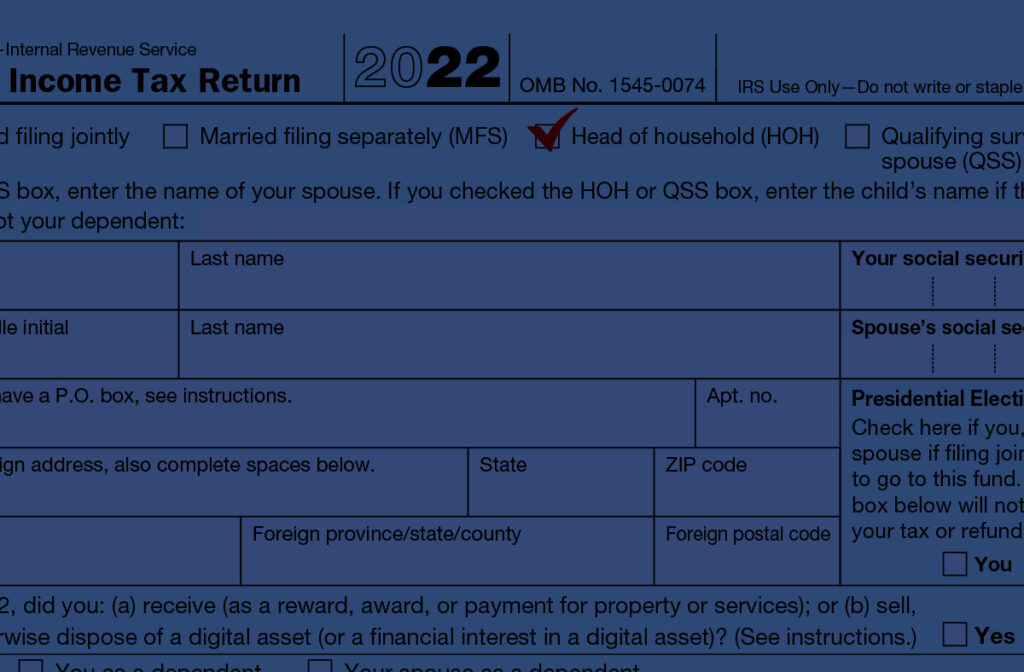
The Head of Household Filing Status is included as part of a tax preparer’s due diligence requirements.